


SCALING NEW SPECIES:
AQUACULTURE DIVERSIFICATION
Aquaculture is a vital industry in order to confront the upcoming animal protein deficit expected as a result of global over-population.
With more than 40 years’ experience in this industry, our work focuses on scaling new species to support diversification of aquaculture as to contribute to increase the food supply in Chile.
TRANSFORMING THE AQUACULTURE INDUSTRY
Projections made by FAO show that feeding a global population of 9.1 billion people by 2050 will require increasing global food production in approximately 70% between 2005/07 and 2050.
In light of this situation, seafood consumption and aquaculture are hence positioned as two main agents to address the deficit that will be generated by the growing demand for healthy proteins. Seafood properties are unique in terms of their benefits to human health.
On the other hand, generating food in a sustainable way is an imperative that finds in aquaculture the lowest carbon footprint system for animal protein production.
The aquaculture industry in Chile and in the world has a great potential. It is estimated that by 2030, over 60% of all fish for human consumption will be provided by aquaculture (GAA, Global Aquaculture Alliance). To comply with that projection, health, nutritional, productive, and environmental challenges will need to be faced.
Fundación Chile has over 40 years’ experience in developing aquaculture technologies with human capital specialized in the area and with technological capacities already installed. We promoted the beginning of Chilean commercial aquaculture in the early 80’s and we now continue with the task of strengthening this industry.
Based on an open innovation model that allows us to articulate different capacities, we focus on both facing the salmon farming challenges as well as those represented by the diversification in aquaculture. We also aspire to decrease the current geographic concentration of production.
A score of candidate species for harvesting have been part of Fundación Chile’s R & D history in this sector with over fifty associated projects based on the work performed by its two aquaculture centers.
SEA BASS PROGRAM

The national aquaculture industry has been mainly focused on salmon. In order to diversify the Chilean aquaculture the Sea Bass Program was created ten years ago, co-financed by Corfo and by private enterprises.
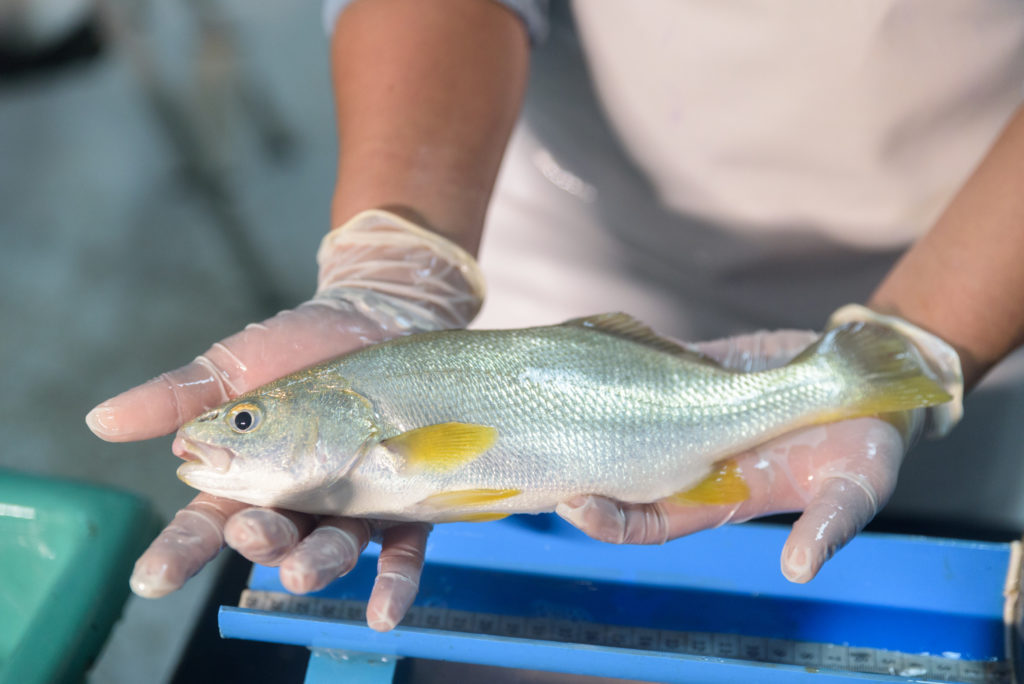
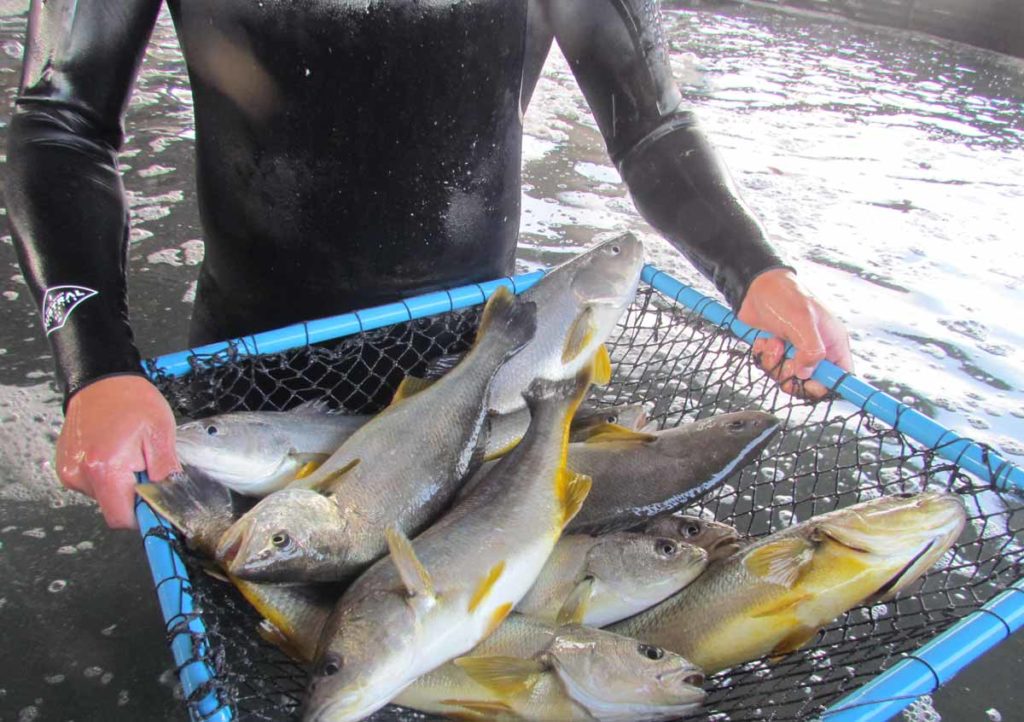
Fundación Chile discovered in the Sea bass (Cilus gilberti) an opportunity to develop this species commercially in a large part of the north of the country, thus incorporating this territory into the nation’s aquaculture activities.
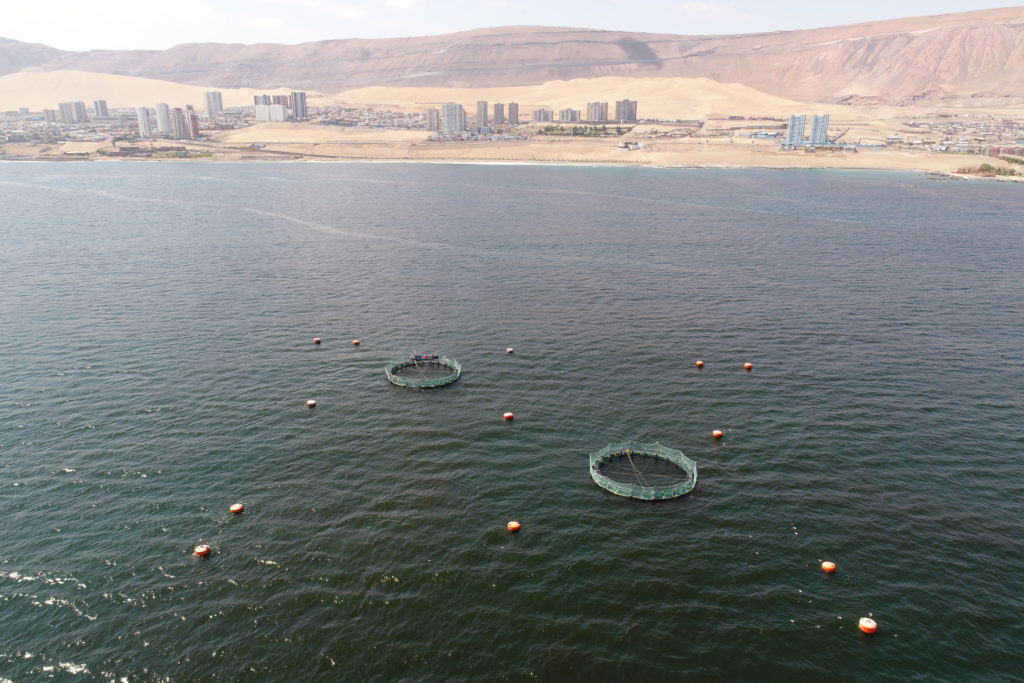
This species has great potential and biological characteristics to be developed in that area. Iquique and Tongoy are the strategic locations for this innovation and development program where different farming systems are tested simultaneously; an experimentation phase that will be prolonged until 2022, the year expected to launch it commercially on the market.
During 2019 the investment of $400 million committed by the company Friosur to the Corvina program was announced, with which the capacity of the breeders and genetic material for availability of juveniles in all seasons of the year will be enhanced.
Program’sRoadmap
1
2
3
Partners
The Sea Bass Program is developed by Fundación Chile and CORFO. It also counts with the participation of Universidad Arturo Prat, Cordunap, Instituto Almirante Carlos Condell, in addition to companies in the aquaculture industry such as ADL Diagnostic Chile, Oxzo, Pesquera Friosur, and Ewos Chile Alimentos.








Our commitment is global. This initiative contributes to:


2.Zero Hunger

3.Good Health and Well-Being

14. Life Below Water
