Green Hydrogen Technology Center sets its goals with Finnish experts and local stakeholders, and unveils new name
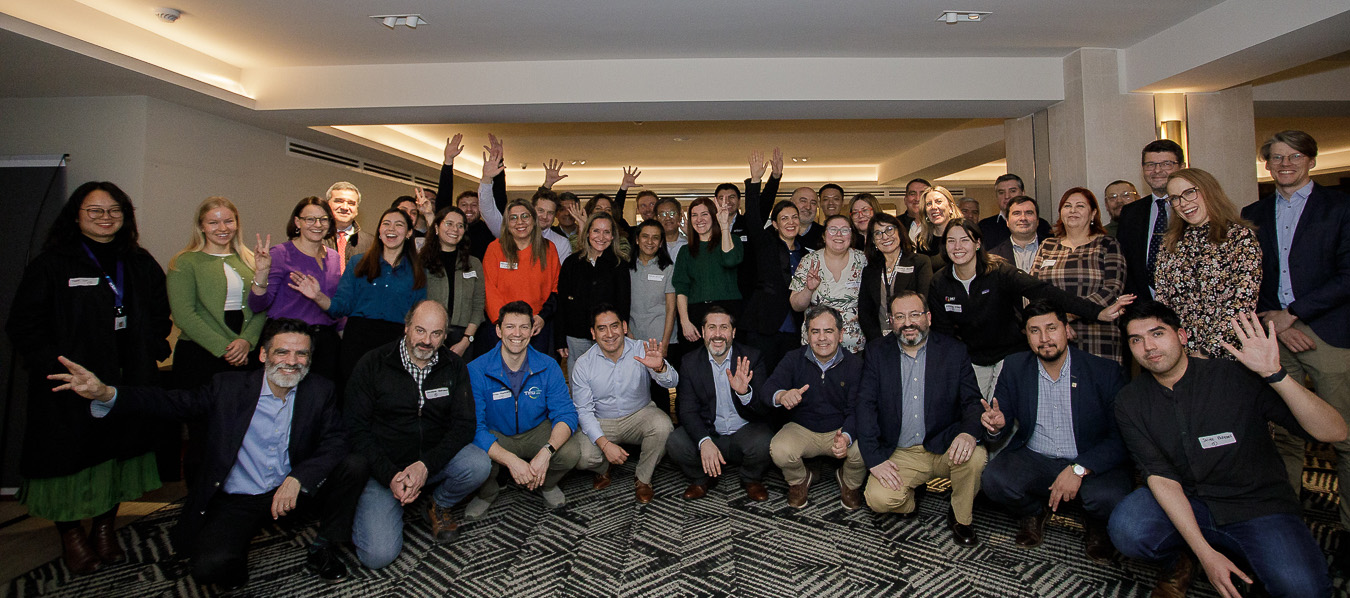
- The Green Hydrogen Technology Center of Magallanes, funded by Corfo, together with the Finnish delegation from VTT and local stakeholders, advanced in the co-construction of its goals and in projecting its social, economic, and environmental benefits.
- In Punta Arenas, was presented its new name: NEMa, Technological Hub for the Development of New Energies in Magallanes.
Two intensive weeks of work in Punta Arenas and Santiago marked a milestone for the Green Hydrogen Technology Center in Magallanes. The initiative, which announced its new name, NEMa, Technological Hub for the Development of New Energies in Magallanes, presented its progress and, together with regional stakeholders and experts from the Finnish applied research center VTT—one of the Center’s co-executors—co-developed its strategic goals and the projection of its social, economic, and environmental benefits.
For this purpose, a VTT methodology with a long history of application in the Nordic country was used: the impact leadership model, which combines vision-building and foresight, with a comprehensive and systemic approach to impact, along with the systematic use of data and modeling to achieve better decisions and proactive policies.
“We held workshops with regional stakeholders, representatives from different sectors-academia, industry, public organizations, and NGOs—where we saw highly participatory work and great commitment, showing that everyone wants to contribute from their own perspective so that the industry can develop and be leveraged by the Region as a driver for other industries and/or for solving challenges faced by the territory,” said Ignacio Covacevich Fugellie, Executive Director of the Technology Center.
Kirsi Hyytinen, Research Team Leader in the Future-proof Societies area and senior scientist at VTT, added: “A key lesson learned so far is that local citizens’ benefits—such as jobs, training, and skills development—must be placed at the heart of hydrogen industry development, while transparency, trust, and ecosystem commitment are essential to ensure sustainable impact.”
It is worth noting that in the last twenty years, VTT has become one of Europe’s leading organizations in hydrogen solutions.
Hernán Araneda, CEO of Fundación Chile, stated: “Working with VTT reflects the value of international cooperation to boost regional development. In Magallanes, we have found great interest and alignment with NEMa’s purpose: coordinating public and private efforts so that the green hydrogen industry becomes a driver of local progress and people’s well-being. We know this is a new, large-scale industry with different sensitivities, which is why we must work collaboratively, with transparency and dialogue.”
The agenda of the Finnish delegation and NEMa also included meetings with the Ministry of Energy, Corfo, the Energy Sustainability Agency, H2Chile, Business Finland, HNH Energy, HIF, the universities of Chile, Magallanes, and Adolfo Ibáñez, Inia, Epa, Edelmag, among others.
Presentation of the new name in a community event
At the CADI. auditorium of the University of Magallanes, the Technology Center hosted the community event “Lessons from Finland for Regional Development and Innovation in Magallanes”, which showcased Finland’s experience and how, in just a few decades, it went from being a war-torn country to a global leader, with a development model based on innovation, knowledge, and applied science.
A panel discussion was also held on which practices and lessons from the Finnish case could be transferred or adapted to Chile. The panel was moderated by Karien Volker, Deputy Manager of Circular Economy at Fundación Chile, and included Salvador Harambour, Executive Director of the H2V Magallanes Association; María José Navajas, Regional Director of Corfo Magallanes; and Cristiane Carvalho, professor at the UMAG School of Engineering.
“The event was very positive because it reflected the spirit with which this Center was born: openness, participation, and shared vision. Seeing different regional stakeholders engaged in dialogue with international researchers showed that NEMa is not only about green hydrogen but also a space to address all new energies that contribute to regional development and the global energy transition. Moreover, having a partner like VTT, with many years of experience generating visible and innovative results—where they have transformed their research into commercial products—gives solidity and projection to this work,” highlighted María José Navajas, Regional Director of Corfo.
This open event was also the occasion when Ignacio Covacevich presented the new name and image of the Center: NEMa, Technological Hub for the Development of New Energies in Magallanes.
“This reflects a collaborative effort in which we defined the common vision and narrative we have about the development of the green hydrogen industry and its derivatives in the Region, highlighting the goal of creating technological solutions that contribute to the planet’s decarbonization and position this region as a strategic player in the energy transition. In this way, we strengthen Magallanes’ economy and train local talent that will transform the future. This is how we create global impact and local progress,” he concluded.
NEMa is coordinated by Fundación Chile, funded by Corfo, and co-executing partners include the Finnish Applied Research Center, VTT Research; the Magallanes Fpyme Hub, the University of Chile, the Adolfo Ibáñez University, and the Energy Sustainability Agency. Enap, HNH Energy, HIF, Edelmag, Consorcio Austral, EDF, and TEG Chile, as well as the Regional Government and Corfo, play a key role in ensuring that the initiative meets the region’s productive and social development requirements. UMAG also joined the initiative in 2025. NEMa is supported by the Sustainable Productive Development Program (DPS), led by the Ministry of Economy, Development, and Tourism.o.
Compartir