


- The President and CEO of the International Council on Mining and Metals (ICMM), Rohitesh Dhawan, and keynote speaker at the VI Sustainability Seminar “Social Value in Mining”, said that our country is a role model for dialogue, innovative solutions and collaboration with communities.
- The meeting organized by Cesco, Consejo Minero and Fundación Chile brought together leaders of the mining industry, and reflected on the contribution of the sector and its relationship with the territory.
The Centro de Estudios del Cobre y la Minería (CESCO), Consejo Minero and Fundación Chile held on Thursday, April 18 the VI Sustainability Seminar: “Social Value in Mining”, as part of the activities of the 27ª version of CESCO Week, which brought together the main authorities and leaders of the global mining industry.
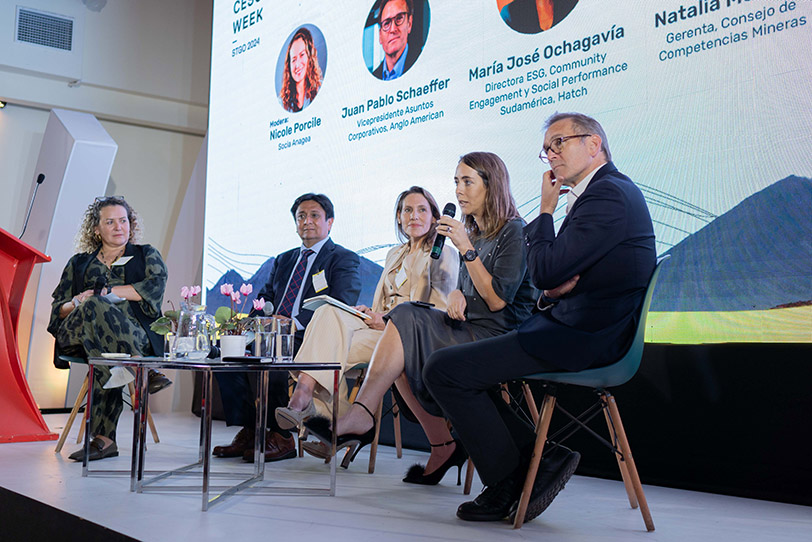
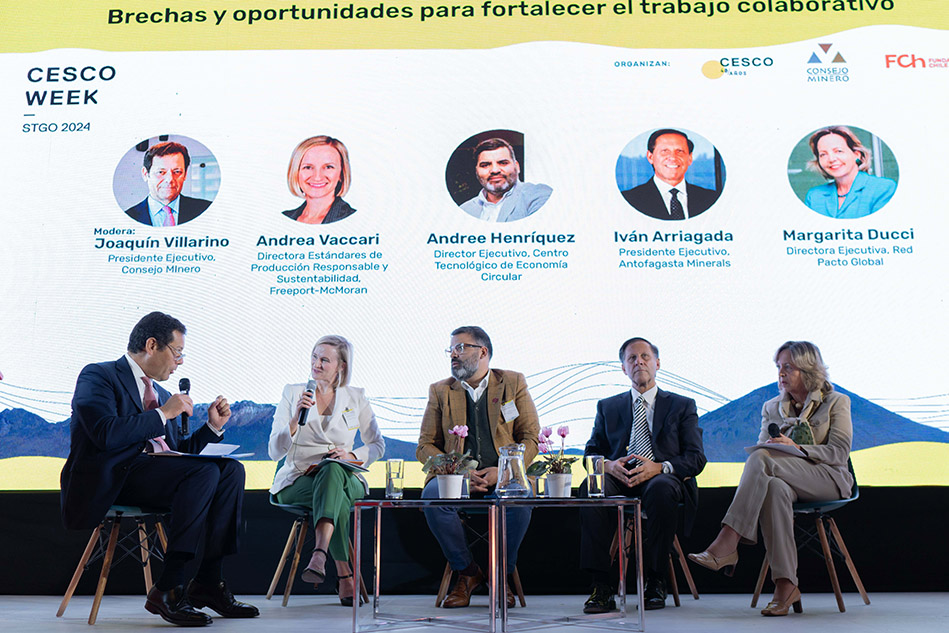
The activity featured distinguished speakers and two conversation panels, including the president and CEO of the International Council on Mining and Metals (ICMM), Rohitesh Dhawan; the executive vice president of the Finnish applied research center VTT, Jussi Manninen; the executive director of CESCO, Jorge Cantallopts; the executive president of Consejo Minero, Joaquín Villarino; the general manager of Fundación Chile, Hernán Araneda; among other distinguished participants who reflected on the contribution of the mining sector and its relationship with the territory and the communities.
During his presentation, Rohitesh Dhawan discussed how the industry can add value to the territories where its projects are located by reaching agreements with neighboring communities. In this context, he highlighted Chile as a leading example of sustainability: “The way in which the mining industry is being managed in Chile, together with the government, is probably one of the best. There is a very open dialogue. In fact, it is a role model for the rest of the world, it is one of the most interesting, best managed and sustainability oriented in the world”.
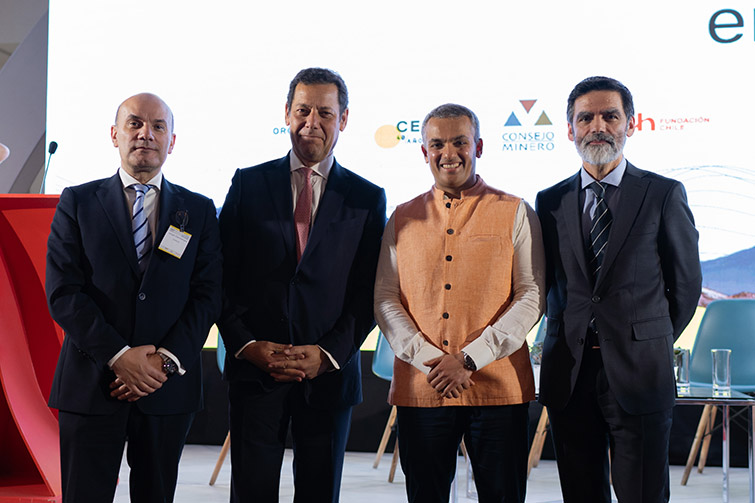
Sustainability: “Chile is 20 years ahead”
The president and CEO of ICMM emphasized that mining is a relevant stakeholder in territorial development, highlighting that this must be developed with an approach that encourages thriving communities, resilience and sound governance.
He added that “the big change we have seen in the last three years is that governments have become very aware of the importance of the mining industry and are stepping in to help. In the past, the mining industry was not a strategic industry, whereas today it is. And Chile is perhaps 10 years or 20 years ahead of the rest of the world.”
In this regard, Jorge Cantallopts, executive director of CESCO, said that “the sector has shown tangible signs to advance in more mining. A mining industry that promotes economic development, that is willing to collaborate, and that understands the integral role it plays in society and the territories”.
On this regard, Joaquín Villarino, executive president of the Mining Council, stated that “collaborative work is one of the pillars of sustainable development and one of the fundamental bases for facing the challenges that the future of mining brings us”.
On the other hand, Hernán Araneda, general manager of Fundación Chile, explained that “large-scale mining in Chile plays an important role in the communities: it stimulates the economies through the creation of jobs, promotes the creation of social value and builds collaborative links in the territories where it operates”.
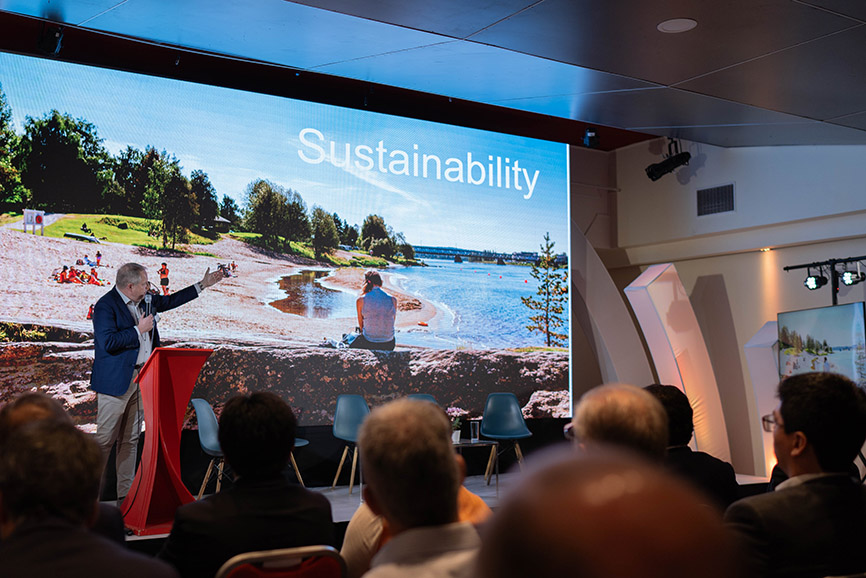
Jussi Manninen, executive vice-president of VTT, the applied research center of Finland, spoke about the systemic challenges facing the mining industry, noting that “no single player has the capacity to create successful applications in the timeframe required for the challenges we face today”. He added that the Nordic countries stand out on sustainability issues not only because they are committed to environmental and socioeconomic priorities, with strong, long-standing industries and supportive public policies, but “because we put cooperation at the core. There is a lot of collaborative work, even between companies that are competitors,” he concluded.
What national and international collaborative initiatives are generating positive changes? What challenges and gaps need to be overcome? How innovation and technology allow us to improve the link with our environment? and How innovation and technology allow us to improve the link with our environment? These were just some of the questions that this meeting sought to answer in order to strengthen the development of increasingly responsible mining.