


- With a view to the implementation of the EPRA (Extended Producer Responsibility Act) and the challenge posed by the increasing manufacturing of WEEE, professionals from Fundacion Chile, the Ministry of the Environment and the Santiago Chamber of Commerce went on an international tour to learn about successful electrical and electronic waste management models.
- Of the 200 thousand tons of WEEE produced each year in Chile, only 3.4% is recycled, compared to 70% in Switzerland, the leader on this matter.
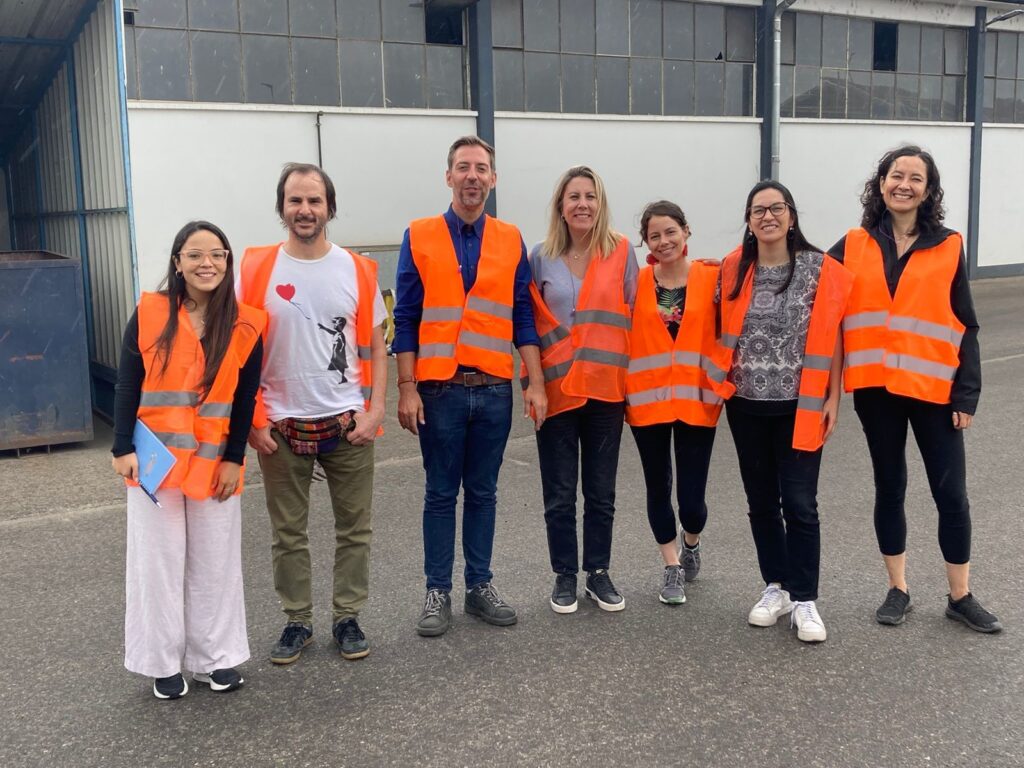
Switzerland, Germany and France, all of them at the forefront in the management of Waste from Electrical and Electronic Equipment (WEEE), were included in the technical mission carried out by the e-waste team —composed of professionals from Fundacion Chile (FCh) and the Ministry of the Environment (MMA)— which on this occasion included the participation of a representative of the Santiago Chamber of Commerce (CCS), given his key role in the creation and design of the future Integrated Management System (SIG) for EEE.
The purpose of this tour was to learn about the experience of countries that have walked through two decades of progress in WEEE management and have made significant progress in the implementation of regulations such as the EPRA (Extended Producer Responsibility Act) for this type of products, in the operation of integrated management systems and in the introduction of the best waste management techniques available. Karien Volker, Fundacion Chile’s assistant manager of Circular Economy, highlights the lessons learned from this technical mission and their implications for the e-waste initiative: “From FCh’s standpoint, the tour was highly valuable, as we were able to see out of a ‘window’ what our future should be like. It was very interesting to observe how they moved towards a more circular economy of e-waste, achieving recovery rates of up to 70% in some countries. It is certainly a path that we could take note of so as not to start from scratch,” she comments, point out that “we had the opportunity to learn about new innovative collection and management models, which could eventually be adapted and/or applied.”
From the Ministry of the Environment, Norma Plaza, a professional from the Circular Economy Office, highlights that “the technical tour was extremely valuable for the MMA, because we were able to connect with the experiences of environmentally sound management of WEEE in Germany, Switzerland and France, creating links and a support network with experts who offered their knowledge and contributions for drafting our decree and its future implementation.”
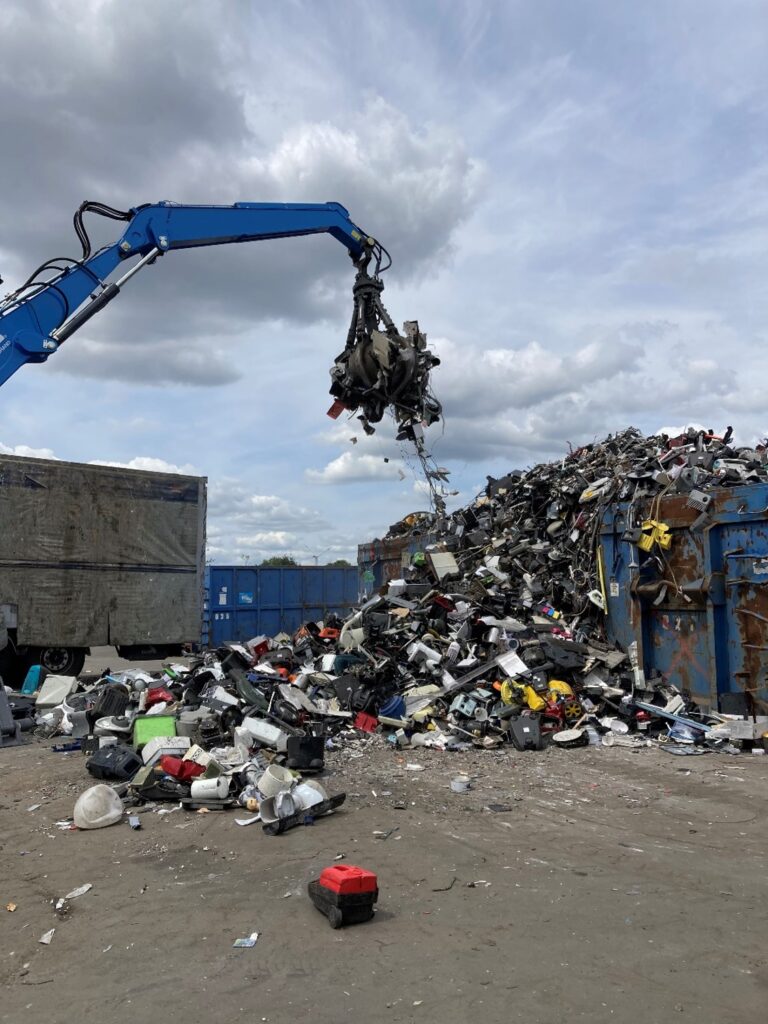
Urban Mining and Other Recycling Processes
The technical mission began with the group’s attendance at the E-Waste World Conference (held in Frankfurt, Germany), the main global meeting on the circularity of EEE and the recovery of its waste, where the latest innovations and solutions were presented to create sustainable management systems, more efficient recovery technologies with less environmental impact, as well as regulatory updates currently under development in this area.
Of the lessons learned at the global event, Florencia Delgado, a project professional at FCh’s Sustainability Management, mentions “the relevance of leveraging the other R’s, such as reducing consumption or repair before recycling; applying eco-design in products to extend the useful life of appliances and facilitate their subsequent repair and recycling, and innovating in the development of technologies that seek to recover precious metals and other components.”
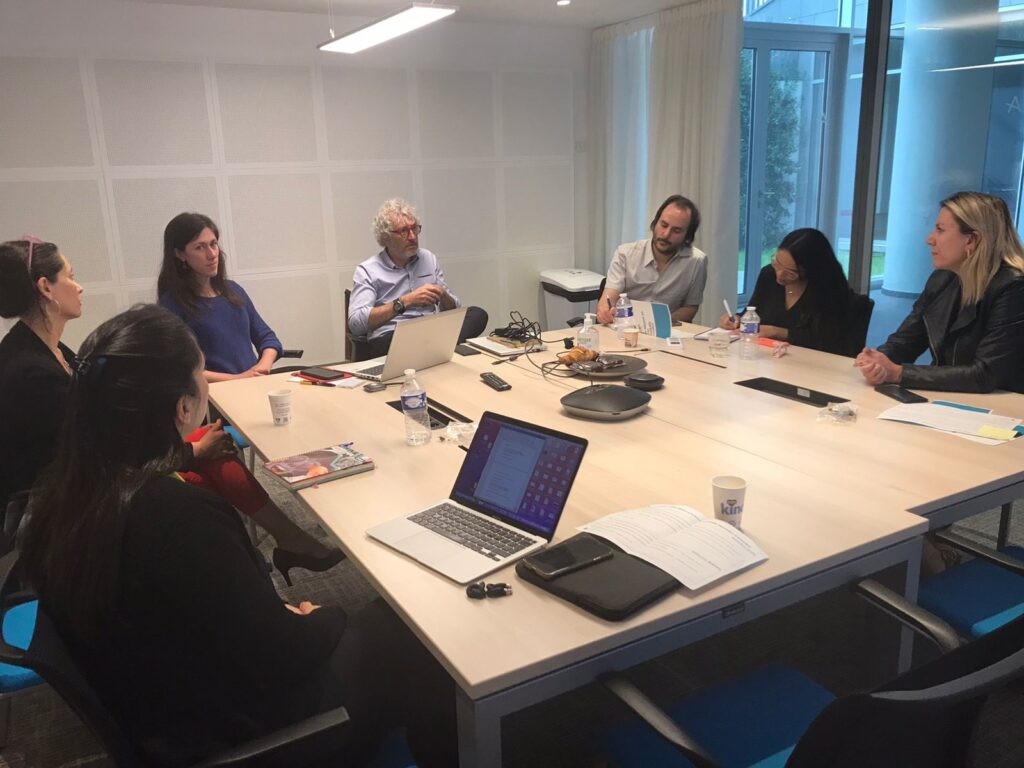
From the point of view of the environmental authority’s experience, the e-Waste team indicates that the meeting with executives of the Swiss Federal Office for the Environment (Bafu) was crucial, who advised starting as soon as possible with the regulatory implementation, which would be refined at a later stage based on practical experience.
In this regard, Mariana Pavon, TRAEE manager at the Santiago Chamber of Commerce, commented:: “Being able to share the challenges, successes and difficulties faced by countries with more than 20 years’ experience in the recycling of electrical and electronic equipment, such as Germany, Switzerland and France, was very enriching, in view of the entry into force of the EPRA for this type of products and all that will be involved with the creation of a collective WEEE management system will imply, which will undoubtedly allow faster and more decisive progress in this area.” The technical mission also included visits to recycling plants in Germany, while in France they were able to see the largest management system in Europe. Some of the valuable experiences gained in these visits include the importance of making an exhaustive classification of components, making use of precious metals (urban mining) contained in printed circuit boards and other fractions, and the need to carry out identification and disposal processes for plastics with BFR-COP (Brominated Flame Retardants, classified as Persistent Organic Pollutants), the latter being key to the e-waste objectives.
ABOUT E-WASTE
E-waste is part of a Latin American project called “Strengthening National Initiatives and Improving Regional Cooperation for the Environmentally Sound Management of POPs in Waste from Electrical and Electronic Equipment in Latin American countries,” which in Chile is promoted by the Ministry of the Environment and Fundacion Chile, with UNIDO (United Nations Industrial Development Organization) acting as the executing agency for this initiative.
Thirteen Latin American countries are part of the project: Peru, Uruguay, Bolivia, Ecuador, Argentina, Nicaragua, Panama, Costa Rica, Venezuela, Guatemala, El Salvador, Honduras and Chile, the latter being the third country that generates the most WEEE per capita, with 9.6 kilos of scrap per inhabitant per year.
