


Corfo refocuses green hydrogen promotion with emphasis on domestic demand and job creation
- Given the global decline in green hydrogen production projections, the entity will direct its financing lines toward initiatives that stimulate local value chains.
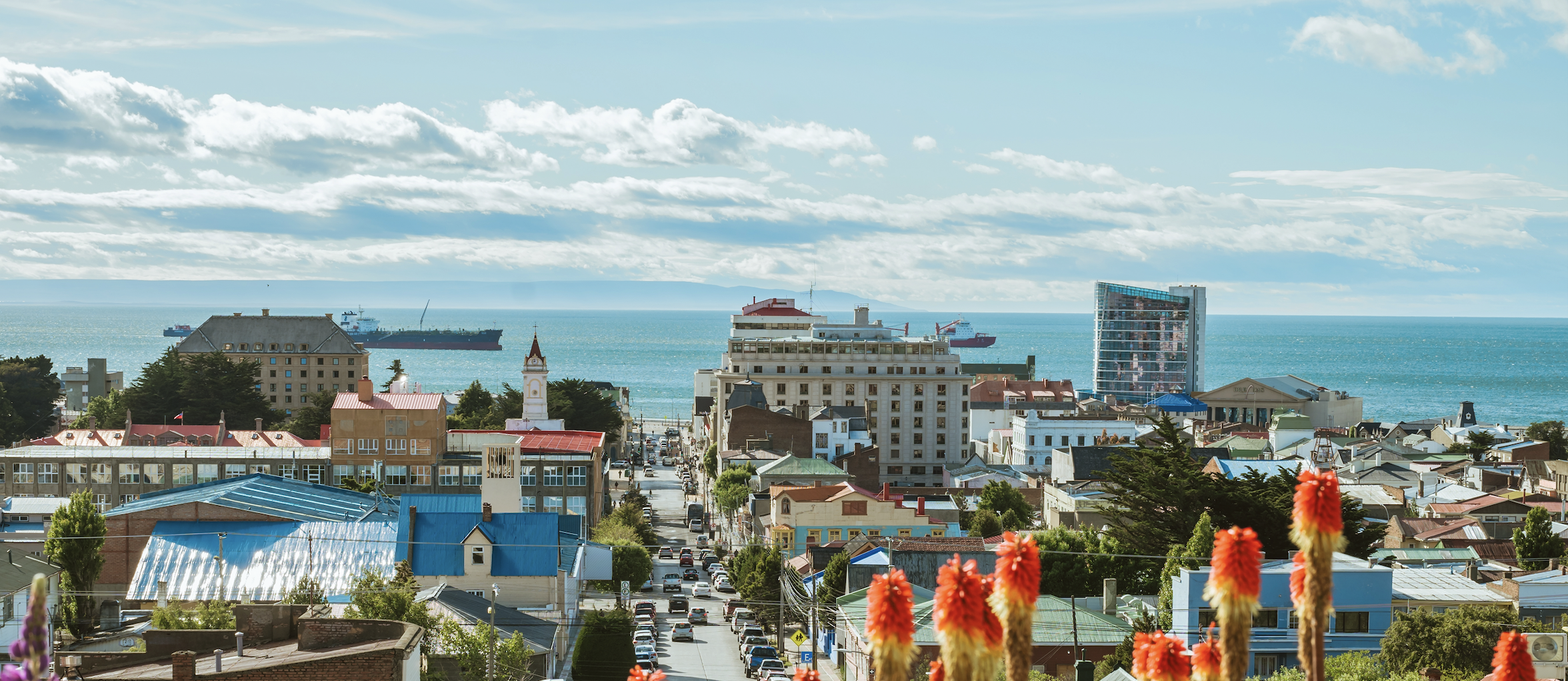
- In this regard, the transfer agreement for the Magallanes Hydrogen Technology Center, NEMa, will conclude early and operate until December 2026.
Corfo’s Manager of Technological Capabilities, Fernando Hentzschel, announced a new approach for low-emission hydrogen promotion instruments. Due to lower-than-projected global demand, the institution will focus its efforts on financing initiatives that boost the use and adoption of this energy source in Chilean industry to generate local activity, develop value chains with national components, and create more jobs.
In its Global Hydrogen Review, the International Energy Agency (IEA) revised down its projections for potential low-emission hydrogen production by 2030, from 49 million to 37 million tons annually, due to the postponement or cancellation of initiatives and persistent competitiveness challenges.
Hentzschel explained that hydrogen production projections have fallen worldwide due to the postponement of large projects because of their high costs and the difficulty in securing financing and offtakers.
In this context and given evidence that demand for validation and piloting technology services will not materialize within the previously anticipated timeframe, Corfo announced that the transfer agreement for the Magallanes Green Hydrogen Technology Center, NEMa, will conclude early and operate until December 31, 2026. This decision responds to the current international industry scenario and is in no way related to the management of the project’s awardees, led by Fundación Chile.
This decision comes amid a global sector adjustment and the country’s need to focus public spending on initiatives that drive economic growth and concrete job creation. «The global trend in the current market state points toward incentivizing smaller-scale renewable hydrogen projects aimed at local consumption and production, with secured offtakers and contracts,» added Hentzschel.
Assets remain in Magallanes
The work carried out by NEMa over its 17 months of execution and in the coming months leading up to its closure will leave a set of unprecedented knowledge assets for the Magallanes and Chilean Antarctic Region, which will remain available for the regional ecosystem and the green hydrogen industry.
Fundación Chile’s General Manager, Hernán Araneda, highlighted this legacy: «NEMa orchestrated an unprecedented effort: higher education institutions, international and national research centers, companies, and regional and national stakeholders worked together to build knowledge that the region did not have.»
By December 31 of this year, Magallanes will have the first technology radar mapping the gaps and priorities of the green hydrogen value chain in the region, territorial matrices for evidence-based decision-making, a comprehensive registry of scientific-technological capacity on a georeferenced platform, among other tools. «Industry conditions have changed, but the knowledge we built with the entire ecosystem is a permanent asset and has been the product of rigorous, excellent work. When industrial projects are ready to move forward, Magallanes will have the technical foundation and better-prepared human capital to receive them,» added Araneda.
Among the Center’s results is the first comprehensive technology action plan for the Magallanes green hydrogen ecosystem, developed alongside the Technical Research Centre of Finland (VTT), which features a multi-criteria, multi-stakeholder monitoring system for the impact of H2V. In terms of human capital development, NEMa coordinated with Magallanes’ higher education institutions to develop programs that contribute to creating training pathways aligned with the current and future requirements of the energy transition.
Additionally, together with the Energy Center of the University of Chile, the first life cycle analysis of the H2V and ammonia chain was generated using local data, an input that regional projects will need to certify their sustainability. In the areas of economic, social, and environmental impact assessment, the first Regional Social Accounting Matrix for Magallanes with a specific breakdown for green hydrogen, and the updated Territorial Human Well-being Matrix for Magallanes, developed with Adolfo Ibáñez University, will be made available. Fundación Chile and Corfo indicated that all NEMa results will be disseminated and transferred upon project closure.
Slow market
After an initial phase of expansion and expectations of accelerated growth, major markets now face slower-than-projected demand, high production costs, and construction delays, factors that have led to cancellations and postponements of projects in various regions of the world.
The original hypotheses supporting rapid export development before 2030 and a strong willingness of international buyers to pay a green premium have not yet materialized. Despite this, Fernando Hentzschel indicated that the country maintains an active policy supporting the development of low-emission hydrogen. Between 2020 and 2025, Corfo committed approximately $41,587 million to 114 initiatives linked to the sector. Likewise, between 2025 and 2026, it continued to promote technology programs, logistics rings, manufacturing initiatives, and international financing mechanisms to strengthen associated value chains.
Corfo indicated that in this new phase, the focus will be on promoting smaller-scale projects linked to local consumption and specific industrial applications, with secured demand and long-term contracts that improve their economic viability. These initiatives build the capacities that large export projects will need when market conditions allow: proven local supplier chains, trained human capital, and operational logistics infrastructure.
In this context, the Transforma Green Hydrogen program will redefine its objective with a broader focus on new energies and the energy transition. This new phase will seek to strengthen the region’s capacities to seize opportunities associated with diversifying the energy matrix, reduce gaps for developing new industries, bolster the regional ecosystem, and generate conditions favorable to new investments, innovation, employment, and the development of local suppliers.
For the Regional Director of Corfo Magallanes and the Chilean Antarctic, Javier Romero, the current challenge is to continue strengthening the region’s capacities to consolidate the development of the green hydrogen industry and other clean energies. «We are strengthening the region’s capacities through updated strategic planning, studies to improve the viability of new projects, and actions that drive the development of suppliers, human capital, and innovation. We want the region to be in a position to attract investment, generate quality employment, and consolidate new energies and the energy transition with concrete benefits for people and regional productive development,» he explained.
Share


