Formation of a Network of Coastal Communities
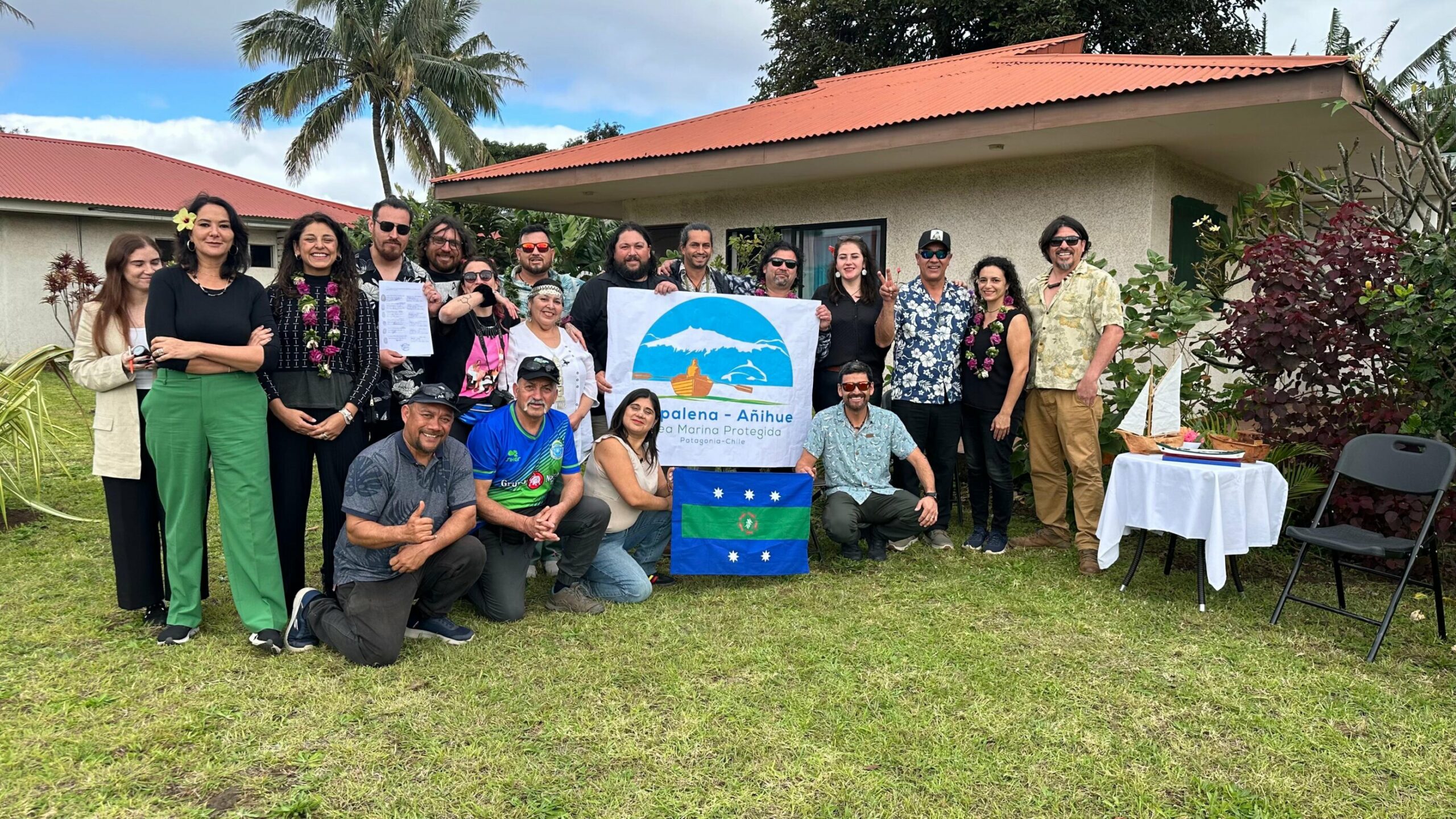
- With the signatures of representatives from the Juan Fernández Archipelago and Desventuradas Islands, Puerto Raúl Marín Balmaceda, and Rapa Nui, the Network of Communities of Marine Protected Areas of Chile was formalized, along with the collaboration agreement between territories. This will allow communities to connect directly with other organizations and funds for the conservation of natural heritage, and to undertake various actions at the territorial level.
- The process was supported by Fundación Chile’s Sustainable Fishing Coves program, with support from BHP Foundation’s Coastal Community Network.
A milestone in environmental protection took place in Rapa Nui on the eve of World Oceans Day, with the creation of the Network of Communities of Marine Protected Areas of Chile (REDCAMP), through the establishment of a corporation.
“Formalizing this corporation allows communities to generate connections and collaborations with other territories, actively participate in the management of marine protected areas (MPAs), influence public policies, and undertake various actions at the community level,” explained Claudia Razeto, Director of Fundación Chile’s Sustainable Fishing Coves program, which has supported the process of establishing this corporation since 2023, with support from BHP Foundation’s Coastal Community Network.
The idea of forming this network emerged in 2017 during the 4th International Marine Protected Areas Congress (IMPAC4). On that occasion, representatives from Rapa Nui, Juan Fernández, and Puerto Raúl Marín Balmaceda set out to create this network. Since 2023, representatives from each community, together with Fundación Chile, have worked jointly on developing the bylaws that made it possible to formalize REDCAMP. To achieve community involvement, a cycle of dissemination, validation, and adjustment of the bylaws was carried out with the inhabitants of each territory, a process that culminated with the signing held in Rapa Nui.
“For BHP Foundation, it is very important to be present at this signing, because it is a project that will be led by the communities themselves. The marine area of these three communities covers more than 85% of all protected sea in Chile, so there is a great deal of work ahead,” said Alejandra Garcés, Director of BHP Foundation.
According to data from the Ministry of the Environment, Chile has 14 multiple-use marine protected areas, with those led by the network standing out for the participation of their communities, both in establishing and co-administering, respectively, the MPAs of Mar de Juan Fernández and Islas Desventuradas, in the Valparaíso Region, and Pitipalena Añihue, in Puerto Raúl Marín Balmaceda, Aysén Region.
One of the signatories, who became Vice President of REDCAMP, Patricio Merino, Executive Director of Fundación Pitipalena Añihue in Puerto Raúl Marín Balmaceda, valued the creation of the network and indicated that one of its objectives is to continue growing: “We intend to bring in more communities that are in favor of protecting their territories and that want to contribute through local knowledge, since no one knows better what happens in the territories than the people who live there. It is very important that we strengthen this organization and ensure that this alliance has national reach,” he said.
During the signing, it was explained that, in the medium and long term, the corporation will seek, among other actions, to encourage the creation of other marine protected areas; invite existing ones to join this network; implement administration, management, and monitoring plans; establish a differentiating seal for products from these areas; and be a voice that is heard when defining regulations that affect them.
“Nearly 9,000 people will benefit directly and indirectly, since the network involves the entire community in each territory. This impact could be expanded to communities that already have MPAs, such as Mar de Pisagua, among others. These are joined by potential marine protected areas, such as the Las Guaitecas Archipelago, where the Sustainable Fishing Coves program has already carried out initiatives to promote the protection of the sea and its resources,” added Razeto.
Share