Economic losses for Chile could amount to up to 27% of GDP under severe impact scenarios with higher levels of warming.

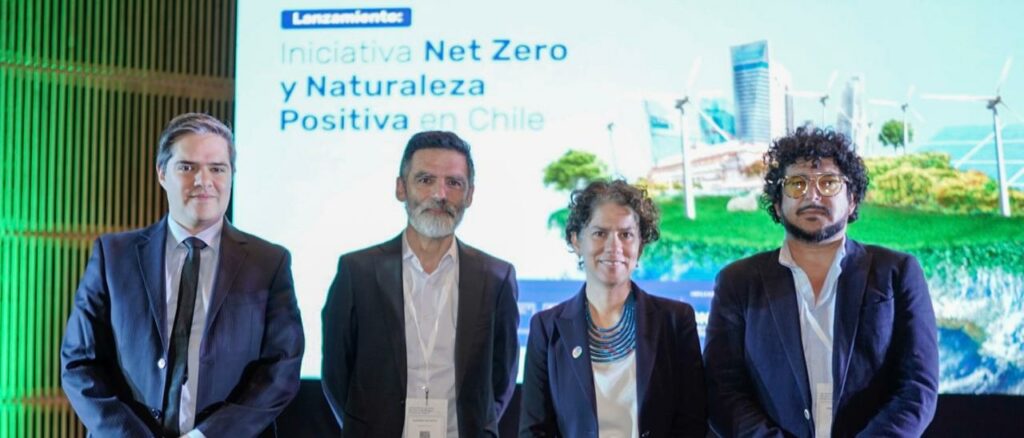
The initiative, framed within the global Net Zero and Nature Positive Accelerator program funded by the GEF, seeks to strengthen Chilean institutions, public policies, and regulations to accelerate development pathways with net-zero emissions and nature-positive outcomes.


Chile has made significant progress in decarbonizing its electricity matrix. However, electricity represents only part of the country’s total energy consumption. The remaining 78% corresponds to thermal energy: heat and cold used in industries, mining, manufacturing, construction, climate control, and other productive processes that still depend largely on fossil fuels.
This opens a strategic opportunity for Chile: to integrate nature into decarbonization processes, strengthening the resilience of industries, enabling new sources of financing, and accelerating the transition toward a more competitive and sustainable economy.
The current context not only slows emissions reductions, but also exposes productive sectors to greater operational, regulatory, and financial risks amid the climate crisis, water stress, and biodiversity loss. That is why taking action now is essential.
Ten years after the Paris Agreement, global emissions remain far from the trajectory needed to achieve the agreed targets. In Chile, reducing emissions produced by the use of thermal energy is one of the most significant ways to contribute to this goal.
ConvergEN+ was created to drive this transition, bringing together technical, institutional, and financial capabilities around a new stage of decarbonization.







ConvergEN+ is an initiative that seeks to drive development and encourage sustainable investment in Chile, creating a more resilient and competitive economy in the face of the progressive effects of climate change. To do so, we bring together public and private stakeholders, technical capabilities, financing, and implementation tools.
The initiative connects the Ministry of Energy’s leadership in demand-side decarbonization, the Ministry of the Environment’s efforts on climate change and nature-positive approaches, and the Ministry of Finance’s strategic vision for a more resilient and sustainable economy.
Its objective is to strengthen institutional capacities and enable the necessary conditions to accelerate development pathways that integrate decarbonization, nature, and economic competitiveness.
ConvergEN+ seeks to transform the way Chile approaches the climate transition: connecting energy, nature, financing, and innovation around a common purpose.


Energy, Environment, and Finance

with implementation by the United Nations Environment Programme (UNEP) and execution by Fundación Chile.

Innovative projects that will generate impact and open new markets.

Integrating nature as a strategic asset for development.
We promote tools, methodologies, and initiatives that enable the incorporation of nature into projects, investments, productive processes, and public policies.
We align instruments, regulations, and investments to drive development and encourage sustainable investment in Chile. We work together with the Ministry of the Environment and the Ministry of Finance to strengthen the coherence and structural alignment of climate change management instruments, integrate nature into business strategies, and develop tools to guide investment toward resilient and competitive solutions.
Includes:

We promote solutions to accelerate the decarbonization of thermal uses in industries, buildings, and productive sectors, incorporating territorial criteria and sustainability.
We drive the next stage of the energy transition: reducing emissions associated with the use of thermal energy.
We develop a roadmap for the decarbonization of energy demand in industries, commerce, and buildings, promoting cost-effective solutions that strengthen the productivity, competitiveness, and resilience of productive sectors.
Includes:

Mobilizing investment toward Energy and Nature Positive solutions:
We develop strategies, instruments, and enabling conditions to connect investment opportunities with energy transition projects and the incorporation of nature. We implement pilot projects in different regions of Chile to demonstrate the technical, economic, social, and environmental viability of new decarbonization technologies, generating practical knowledge that enables their replication and scaling.
Implementation enablers:
ConvergEN+ coordinates public-private governance aimed at accelerating the transition toward a resilient and competitive economy in Chile.
The initiative brings together public institutions, international organizations, technical stakeholders, academia, the private sector, and civil society, integrating strategic, regulatory, financial, and implementation capabilities to drive a shared roadmap.