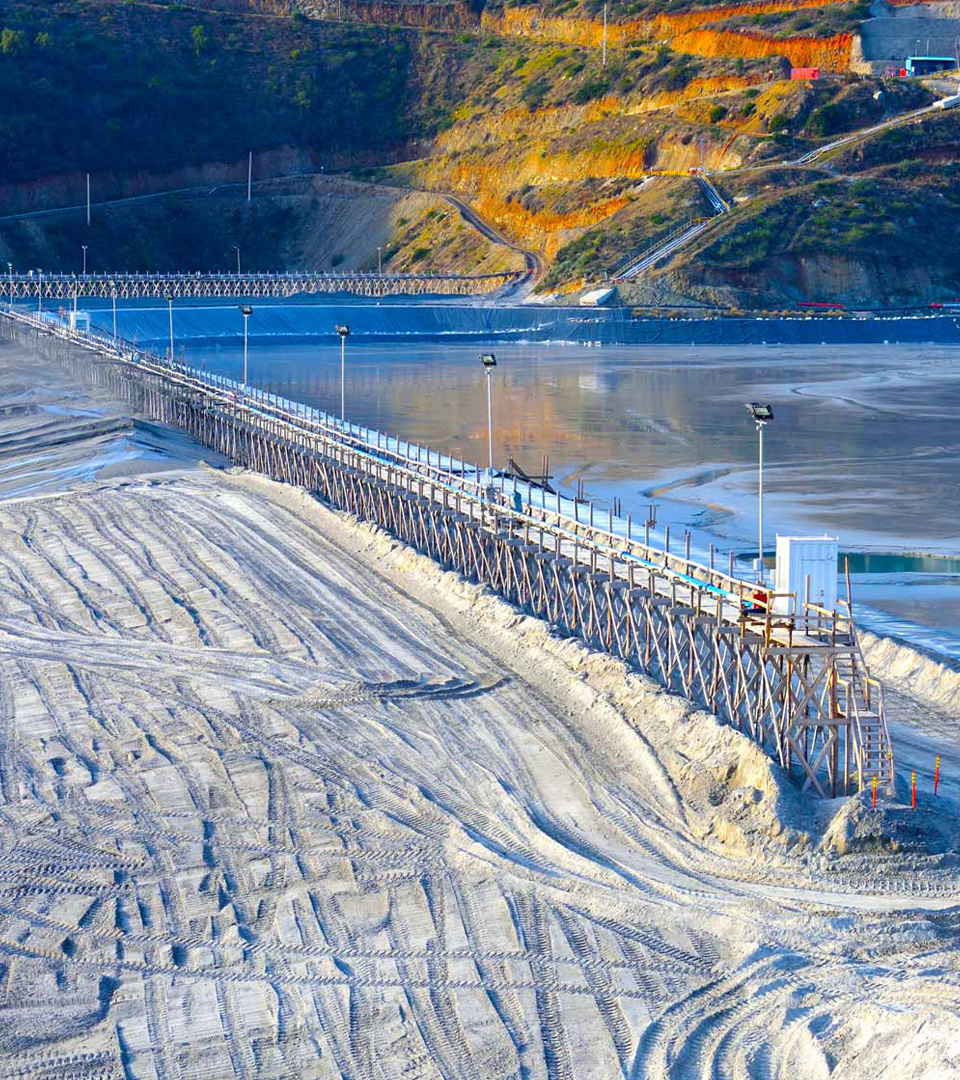
Chile’s economic and social development is directly related to mining, as it is one of the country’s main productive activities. In this context, it is important to consider the fact that this activity carries an inherent legacy: the generation of mining waste or residues, among which are tailings deposits.
According to the latest cadastre published by the National Geology and Mining Service (SERNAGEOMIN), there are a total of 740 deposits in Chile. This figure places the country third in the world for the number of tailings deposits, after China and the United States.
Operating tailings deposits are dynamic facilities, as they grow in area, volume, and/or height over time; in addition, they are continuously exposed to various operational and/or natural situations that may compromise their stability.
At the international level, records of incidents with catastrophic outcomes that have occurred in recent years in countries such as Canada, the United States, Brazil, China, Mexico, and Chile have triggered a thorough review of tailings deposits and their management, both at the governmental and business levels. This review seeks to ensure the stability of these structures through, for example, changes in designs, regulations, and companies’ internal governance.