Sumar Saberes
Initiative that seeks to support and accelerate improvements in learning outcomes in reading, writing, and communication; mathematical and scientific thinking; socio-emotional development; and school attendance, by promoting evidence-based decision-making.
Context
Why is it important to address the challenge?
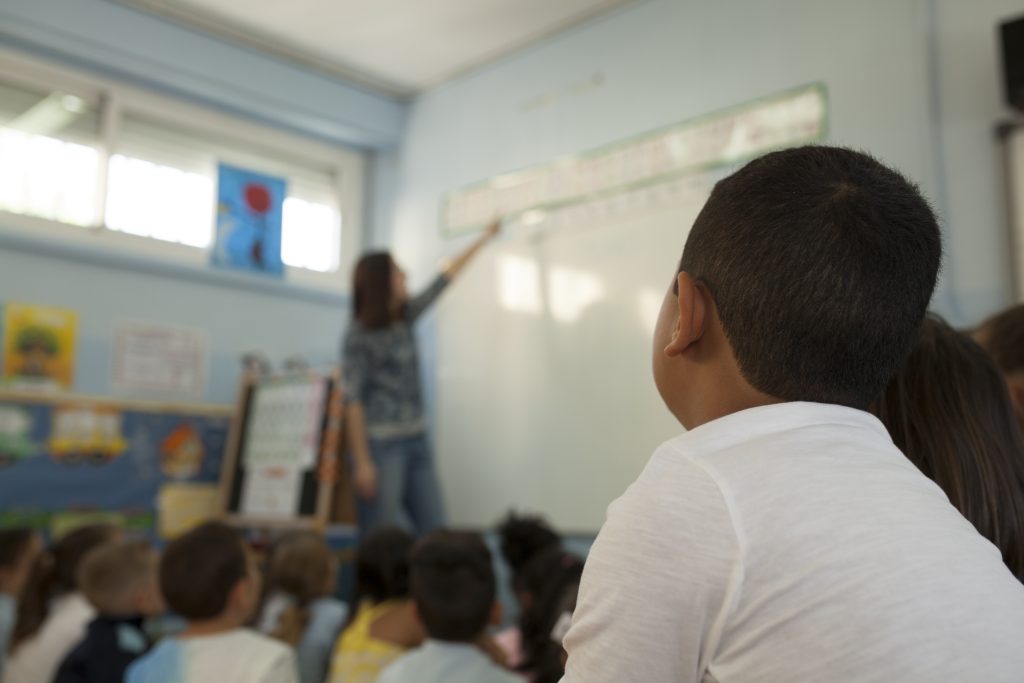
SIMCE 2023 showed that, although there was a significant improvement in Mathematics and Reading learning outcomes compared to the previous measurement, a relevant percentage of 4th-grade and 10th-grade students are still not achieving learning outcomes at adequate levels. In 4th-grade Mathematics, the percentage of students at the insufficient level was 38% in 2023 (compared to 45% in 2022), and in 10th grade it was 51% (compared to 54% in 2022). In 4th-grade Reading, the percentage of students at the insufficient level was 29% (compared to 32% in 2022), and in 10th grade, 51% (compared to 53% in 2022).
On the other hand, the gender gap remains compared to the latest measurement, failing to recover the pre-pandemic level. Fourth-grade female students reached an average score of 253 points, while male students reached 265 points, creating a 12-point gap.
Objectives
Objectives
Its purpose is to support and accelerate improvements in learning outcomes in reading, writing, and communication; mathematical and scientific thinking; socio-emotional development; and school attendance, by promoting evidence-based decision-making and the effectiveness of education spending and investment, identifying which initiatives that support educational improvement work, what conditions enable their success, how they are implemented in diverse contexts, how they are scaled, and how they become sustainable.
This public-private alliance developed three strategic components that translate into concrete and measurable actions. These guide the direction of the initiative in the short and medium term, ensuring coherent implementation aligned with its purpose.
- Evidence generation: They collect and analyze information to make better educational decisions, through mapping, evaluations, and useful reports for the system.
- Scalability roadmap: They identify what works and design pathways so that good practices can be expanded and adapted across different contexts in the country.
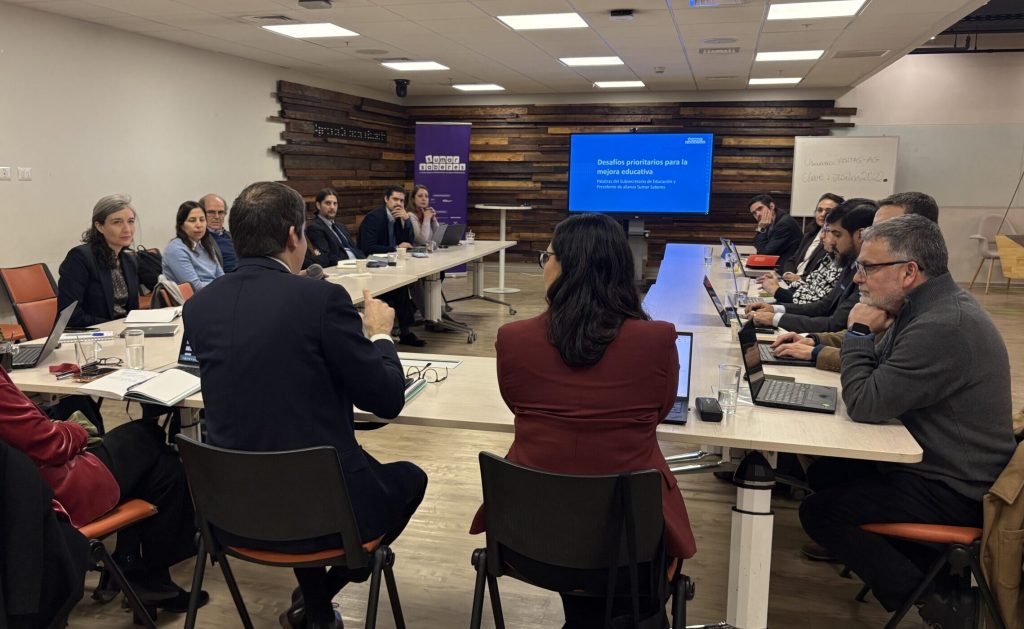
- Shared vision and governance: They build a common and coordinated vision among public and private actors, strengthening joint work and the sustainability of the alliance.
Governance
Governance
An initiative by
Impact
Expected results
First stage (2024–2025)

Identification of initiatives that support educational improvement.

Dissemination to other communities within the education system.
Second stage
Methodological inclusion of students’ and teachers’ perspectives in the information-gathering process.

Development of an innovation laboratory to pilot the sustainable scaling of effective initiatives.
Associated SDGs
Associated SDGs
This initiative contributes to the following Sustainable Development Goals:


Enter your details
If you are interested in implementing a similar initiative or learning more about its development, please complete this form.